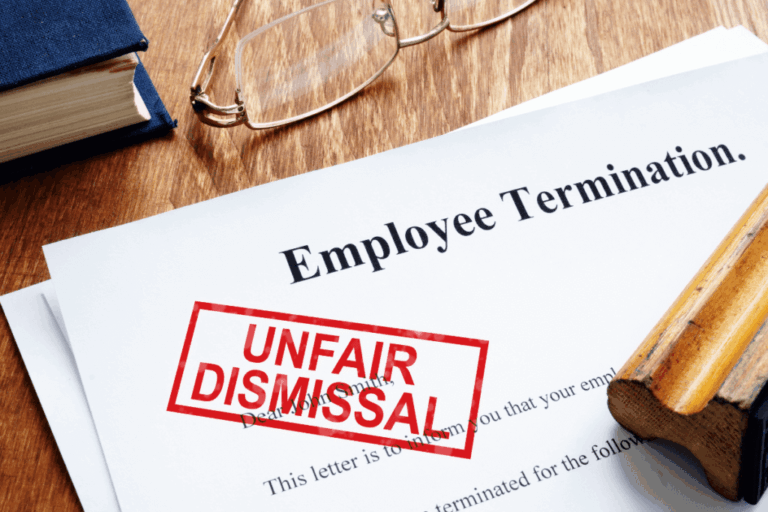
The phone call is almost always the same. A client learns from new counsel, or from a court order, or from the silence of a lawyer who has stopped returning calls, that the case they thought was active is actually dismissed because a deadline was missed. The personal injury statute of limitations ran. The 90-day notice of claim was never filed. The notice of appeal was never served. The lawsuit was filed but never properly served on the defendant within 120 days. By the time the client understands what happened, the underlying case is dead, and the only remaining question is whether the lawyer who missed the deadline can be held responsible for what was lost. The team at Warner & Scheuerman handles these missed-deadline malpractice matters as a regular part of the firm’s plaintiff-side legal malpractice work, and the analysis runs through a specific framework that most general practitioners do not apply.
A missed deadline is the cleanest negligence fact pattern in legal malpractice law. It is also more complicated than it looks.
Why Missed-Deadline Malpractice Looks Easy
In most legal malpractice cases, the negligence element is the hardest to prove. Reasonable lawyers can disagree about strategy, settlement value, motion practice, drafting choices, and trial tactics. Standard-of-care experts often line up on both sides. The plaintiff’s case can collapse on whether the attorney’s choice was actually below the professional standard.
A missed deadline removes that ambiguity. Statutes of limitation, notice-of-claim deadlines, and procedural filing windows are objective and documented. The deadline either was met or was not. The reasonable lawyer standard is straightforward: a competent attorney calendars statutes of limitations and files within them. The breach element of legal malpractice, in a missed-deadline case, is often undisputable on the face of the record.
That structural simplicity is what gives missed-deadline malpractice its near-strict-liability reputation. The cases settle at higher rates, get past motions to dismiss more frequently, and generate larger verdicts when they reach trial.
The complication is that breach is only one of the four elements of a New York legal malpractice claim. The other three still apply.
The Most Common Deadlines New York Lawyers Miss
The deadlines most frequently at issue in missed-deadline malpractice cases include:
- The three-year personal injury statute of limitations under CPLR 214(5)
- The two-and-a-half-year medical malpractice statute of limitations under CPLR 214-a
- The two-year wrongful death statute of limitations under EPTL 5-4.1
- The one-year statute of limitations for intentional torts (assault, battery, false imprisonment, defamation) under CPLR 215
- The six-year contract statute of limitations under CPLR 213(2)
- The 90-day notice of claim deadline under General Municipal Law § 50-e(1)(a) for tort actions against public corporations
- The one-year-and-90-day statute of limitations against municipalities under General Municipal Law § 50-i(1)
- The 30-day notice of appeal deadline under CPLR 5513
- The 120-day service of process deadline under CPLR 306-b
- Federal Rule of Civil Procedure deadlines, including FRCP 4(m) for service and FRCP 56 for summary judgment briefing
- Workers’ Compensation Law § 28 two-year notice deadlines
- Insurance policy notice provisions, late-notice claims, and contractual claim deadlines
Each of these has specific tolling and exception provisions that a competent attorney is expected to know. The 90-day notice of claim deadline under GML § 50-e is particularly unforgiving because it applies before the statute of limitations even comes into play, and a notice not served within 90 days kills the underlying tort claim before suit can be filed.
The Case Within a Case Still Applies
The hardest part of a missed-deadline malpractice case is not proving the deadline was missed. It is proving that, but for the missed deadline, the client would have actually won the underlying case.
The Court of Appeals’ framework in Rudolf v. Shayne, Dachs, Stanisci, Corker & Sauer, 8 N.Y.3d 438 (2007), and Davis v. Klein, 88 N.Y.2d 1008 (1996), requires the malpractice plaintiff to show that he or she “would have prevailed in the underlying action or would not have incurred any damages, but for the lawyer’s negligence.” The case-within-a-case burden does not relax because the attorney’s negligence was a calendar mistake rather than a strategic one.
The implications for missed-deadline cases are concrete:
If the attorney missed the SOL on a personal injury claim, the malpractice case requires proof of liability and damages in the underlying tort case. The malpractice plaintiff has to prove the original defendant was negligent, that the negligence caused the injury, and that the damages were of the magnitude claimed.
If the attorney missed the 90-day notice of claim against a municipality, the malpractice case requires proof not only that the municipality was liable in tort but that the underlying claim would have survived sovereign immunity defenses, comparative fault analysis, and any specific public-entity defenses (e.g., special duty, governmental function immunity).
If the attorney missed an appellate deadline, the malpractice case requires proof that, on a properly preserved and competently argued appeal, the appellate court would have ruled in the plaintiff’s favor. That is a particularly difficult showing.
If the original defendant in the underlying case was judgment-proof or had no insurance coverage, the malpractice claim can fail on damages even if liability and causation are clear, because Rudolf requires “actual and ascertainable damages” rather than a paper recovery.
The Appellate Division in Humbert v. Allen, 89 A.D.3d 804, and the line of cases applying it have dismissed missed-deadline malpractice complaints for failing to plead specific factual allegations of how the underlying case would have prevailed. A complaint that says “the attorney missed the deadline and I lost the case” without developing the underlying merits will not survive a motion to dismiss.
When the 90-Day Notice of Claim Deadline Gets Missed
The notice of claim deadline under GML § 50-e is a particularly common source of malpractice claims because the timeline is shorter than most clients and many attorneys realize.
A claim against a city, county, town, village, school district, public hospital, or other public corporation in New York generally requires service of a written, sworn notice of claim within 90 days of the date the claim arises. The notice has to identify the claimant, the nature of the claim, the time and place of the incident, and the items of damage. Service has to be made on the proper public corporation through the procedures set out in the statute. A claim against the New York City Health and Hospitals Corporation, the Metropolitan Transportation Authority, the Long Island Rail Road, the Port Authority, NYCHA, the New York City Department of Education, and a long list of other public bodies all run through this framework or one that explicitly incorporates it.
The 90-day clock does not pause for hospitalization, grief, the client’s lack of legal sophistication, or the attorney’s caseload. GML § 50-e(5) provides a discretionary late-notice mechanism, but the relief is not guaranteed and is granted based on three statutory factors: whether the municipality had actual knowledge of the essential facts of the claim within 90 days, whether the delay substantially prejudiced the municipality’s ability to investigate, and whether the claimant offers a reasonable excuse for the delay.
Many late-notice motions fail. When the late-notice motion fails, the underlying claim is barred, and the client’s only remaining recourse is against the attorney who missed the original deadline.
How Warner & Scheuerman Evaluates Missed-Deadline Claims
The firm’s intake on a missed-deadline matter runs three threshold questions in parallel.
The first is the missed-deadline itself. What deadline applied, what was the date of the precipitating event, when did the deadline run, and what does the documentary record (engagement letter, court filings, certified mail receipts, internal calendar entries) show about whether and how the deadline was missed.
The second is the legal malpractice statute of limitations under CPLR 214(6) and the continuous representation doctrine articulated in Shumsky v. Eisenstein, 96 N.Y.2d 164 (2001). The malpractice clock generally starts on the date the underlying deadline ran, but continuous representation may toll the limitations period until the lawyer’s involvement in the same matter ended. Shumsky itself was a missed-deadline case, and its tolling framework keeps many missed-deadline malpractice claims alive that would otherwise be time-barred.
The third is the case-within-a-case. What evidence supports the underlying claim, what defenses applied, what was the realistic settlement or trial value, and was the original defendant in a position to actually pay a judgment.
Where the analysis on all three questions supports the claim, the matter typically proceeds to a CPLR 3213 motion for summary judgment in lieu of complaint or to a traditional pleading, depending on the strength of the documentary record. Damages analysis follows Rudolf‘s actual-and-ascertainable framework, including consequential damages where appropriate.
If you learned that your case was dismissed, your appeal was rejected, or your claim was barred because a deadline was missed by your attorney, the first call is to confirm what happened and the second is to evaluate whether the malpractice claim is timely and viable. Reach out to Warner & Scheuerman to walk through the deadline, the underlying case, and the recovery framework that New York legal malpractice law actually applies to missed-deadline matters.