
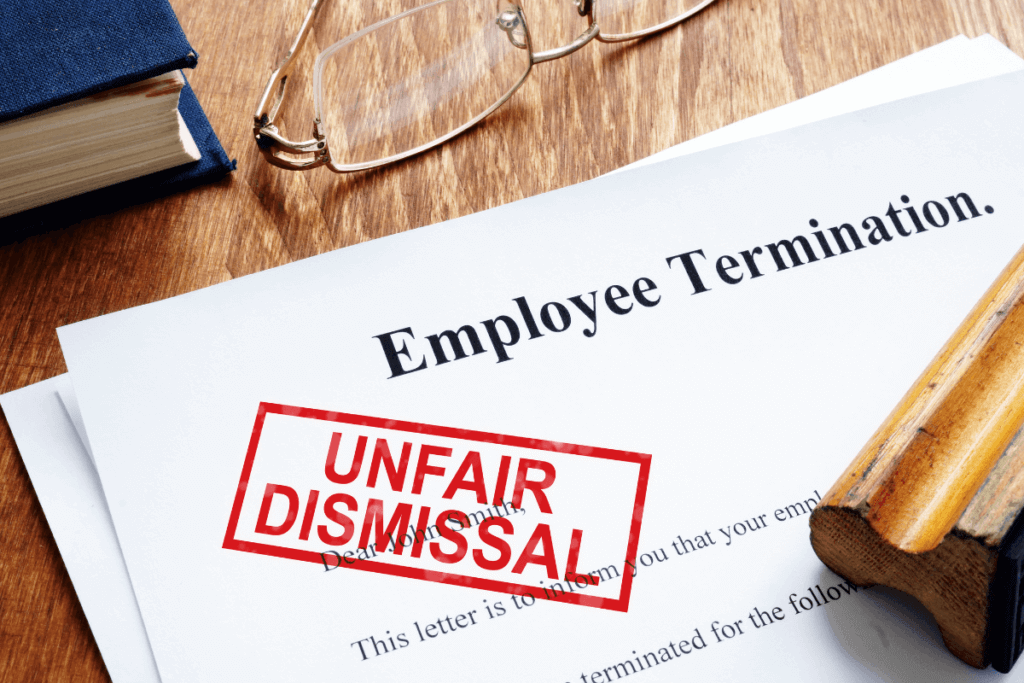
Federal employment law has procedural complexity that can frustrate even experienced practitioners, but few concepts create as much confusion as the mixed-case complaint. For federal employees in Virginia who have been removed, demoted, or suspended and believe discrimination played a role in that decision, the question of where to file and in what order is not a technicality. It is a threshold determination that can shape the entire trajectory of the case and, if answered incorrectly, foreclose legal remedies before any substantive review ever occurs. Virginia federal employee law attorneys who handle federal employment matters encounter this issue regularly, often when a client arrives having already made a procedural choice that cannot be undone.
What Makes a Case “Mixed”
A mixed case exists at the intersection of two distinct legal frameworks. On one side sits the Merit Systems Protection Board, which has jurisdiction over certain appealable adverse actions: removals, demotions, and suspensions of more than 14 days taken against employees with appeal rights. On the other side sits the federal EEO process, which addresses employment discrimination based on race, color, sex, national origin, religion, disability, age, and reprisal.
When an employee is subjected to an appealable adverse action and believes discrimination was a motivating factor in that action, both frameworks potentially apply simultaneously. That combination is what creates a mixed case. The employee does not have two separate claims so much as a single employment action that can be reviewed through two different lenses, and the procedural rules governing how to pursue that review are specific, intersecting, and unforgiving of mistakes.
An employee who is removed from a federal agency in Virginia and believes the removal was based on their race has a mixed case. So does an employee who is demoted following a return from medical leave and believes the agency’s real motivation was their disability. The adverse action is within MSPB jurisdiction; the discrimination allegation brings the EEO framework into play.
The Two Filing Paths and What Each One Triggers
Federal regulations give an employee with a mixed case two initial filing options, but choosing one path has direct consequences for what happens next and what rights remain available.
The first option is to file a mixed-case complaint through the agency’s internal EEO process. This means contacting an EEO counselor within the 45-day deadline and proceeding through informal counseling, followed by a formal EEO complaint if counseling does not resolve the matter. The agency investigates, issues a report, and the employee can then request a hearing before an EEOC administrative judge or a final agency decision. If the outcome is adverse, the employee can appeal to the MSPB rather than to the EEOC’s Office of Federal Operations, which is the path available in non-mixed cases.
The second option is to file a mixed-case appeal directly with the MSPB within 30 days of the effective date of the adverse action or 30 days after receiving the final agency decision, whichever is later. At the MSPB, the employee can raise the discrimination claim as an affirmative defense. An administrative judge will hear both the procedural adverse action challenge and the discrimination allegation together. If the MSPB issues a decision, it can be petitioned for review to the full Board, and from there appealed to a federal district court, where the employee gets a de novo review of the discrimination claim.
The critical rule is this: an employee cannot file both at the same time. Filing with one forum first triggers specific rules about what the other forum can do, and in some circumstances, filing in the wrong sequence or attempting to pursue both simultaneously results in one proceeding being dismissed.
The Consequences of Forum Selection
The choice between the EEO path and the MSPB path is not merely procedural preference. The two forums offer meaningfully different procedural environments, and the strategic implications of that difference matter.
At the MSPB, the agency bears the burden of proving the underlying adverse action charge by preponderance of the evidence on the conduct or performance side, while the employee must establish the discrimination claim. The discovery process at the MSPB tends to be more streamlined than in federal district court, and the timeline from filing to hearing is often faster than the EEO process.
The EEO path, by contrast, offers access to an EEOC administrative judge whose primary expertise is discrimination law, a potentially more thorough investigation process, and ultimately the possibility of a federal district court trial with a jury if the case reaches that stage through the right procedural sequence.
Employees who want access to a jury trial on their discrimination claims need to be particularly attentive to forum selection. The path to a jury trial in a mixed case runs through the EEO process to a final agency decision, then to federal district court, not through the MSPB to the Federal Circuit.
What Happens When an Employee Files in the Wrong Place First
The practical consequences of a procedural misstep here range from inconvenient to catastrophic depending on the specific error and the deadlines involved.
If an employee files a mixed-case appeal at the MSPB and the Board determines it lacks jurisdiction because the adverse action does not meet the threshold for an appealable action, the case may be transferred to the EEOC. But if the employee has missed the 45-day EEO counselor contact deadline in the meantime, the EEO claim may be time-barred by the time it arrives in the right forum.
Conversely, an employee who pursues the EEO path and receives a final agency decision has 30 days to appeal to the MSPB. Missing that window eliminates the MSPB appeal right. The employee is then left with the option of filing in federal district court, which requires its own analysis of exhaustion and timing requirements.
The MSPB and EEOC have a jurisdictional coordination mechanism for mixed cases, but it depends on the employee and their representative understanding which forum has the case at any given point in the process and what the applicable deadlines are from that moment forward. The system does not automatically protect employees from deadline errors created by procedural confusion.
Discrimination as an Affirmative Defense at the MSPB
One aspect of mixed-case procedure that sometimes surprises employees is that raising discrimination at the MSPB does not require a separate EEO filing first when the discrimination is raised as an affirmative defense in an otherwise properly filed adverse action appeal. An employee who timely appeals a removal to the MSPB can assert discrimination without having gone through the EEO counselor process, because the MSPB has concurrent jurisdiction over the discrimination claim in a properly filed mixed case.
This matters practically because it means an employee who missed the 45-day EEO counselor deadline may still have an avenue to raise discrimination, provided they timely filed the MSPB appeal and the action is one over which the Board has jurisdiction. The remedies available through the MSPB affirmative defense route differ somewhat from those available through the full EEO process, and the procedural history of the case will affect what happens on appeal, but the option exists.
What does not survive a missed deadline in either forum is the discrimination claim on its own, outside the mixed-case framework. If both the EEO counselor contact deadline and the MSPB appeal deadline have passed, the employee has lost access to both primary forums for the discrimination allegation.
Practical Guidance for Virginia Federal Employees Facing This Situation
The decision about which forum to use first in a mixed case should not be made based on which process feels more accessible or familiar. It should be made based on the specific facts of the adverse action, the nature of the discrimination claim, the remedies the employee most needs, and the strategic assessment of which forum is more likely to produce a favorable outcome given those facts.
That analysis requires understanding both the MSPB’s procedural rules and the EEO framework well enough to evaluate the tradeoffs. It also requires acting quickly, because the deadlines in mixed cases are short and can run concurrently.
Virginia Federal Employee Law and the Cost of Procedural Mistakes
The mixed-case framework is one area of Virginia federal employee law where procedural errors are particularly difficult to recover from. Unlike some mistakes that can be corrected mid-case, a wrong forum choice or a missed deadline in a mixed case often produces irreversible consequences. The discrimination claim that could have been litigated disappears. The adverse action stands unchallenged on the merits.
If you are a federal employee in Virginia who has been removed, demoted, or suspended, and you believe discrimination contributed to that decision, do not rely on general descriptions of the process to make the forum selection decision. Consult with an attorney who understands both the MSPB and EEO frameworks before you file anything. The choice you make at the outset sets the boundaries for everything that follows.