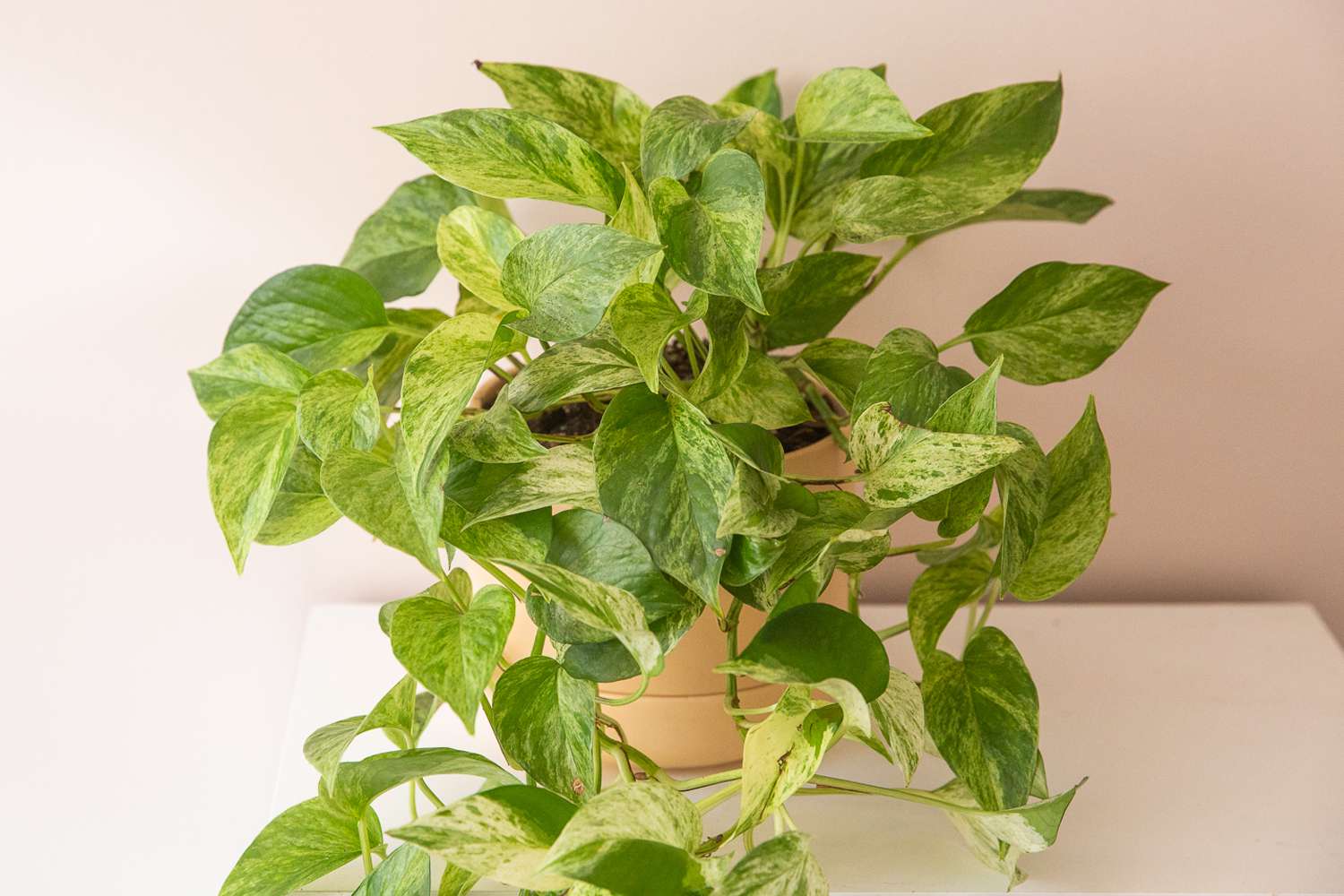
Walk into any well-decorated home and there’s a good chance you’ll spot a trailing plant with creamy white and green leaves spilling from a shelf or hanging planter. That’s almost certainly epipremnum aureum marble queen – the most visually striking variety of the beloved pothos family.
What makes it special isn’t just the looks. Marble queen pothos is one of the most forgiving houseplants you can own, yet it rewards attentive care with leaves so heavily variegated they look almost painted. Here’s what you need to know to keep yours thriving.
What Makes Marble Queen Different?
Epipremnum aureum has many cultivars – golden pothos, neon pothos, pearls and jade – but marble queen stands out because of its extreme variegation. The leaves are marbled with white, cream, and pale green in irregular patterns. No two leaves are identical.
The trade-off: all that white means less chlorophyll. Less chlorophyll = slower growth than golden pothos. But for most plant owners, the stunning appearance is absolutely worth the slightly slower pace.
Care Essentials at a Glance
| Factor | Ideal Condition |
|---|---|
| Light | Medium to bright indirect light |
| Water | Every 1-2 weeks; let top 2 inches dry out |
| Humidity | 40-60% (average home is fine) |
| Temperature | 65-85°F (18-29°C) |
| Soil | Well-draining potting mix with perlite |
| Fertilizer | Balanced liquid fertilizer every 4-6 weeks in spring/summer |
| Pot | Any with drainage holes |
| Toxicity | Toxic to pets and children if ingested |
Light: The Key to Keeping That Variegation
Here’s the thing most guides skip over: the marble pattern depends on light.
In low light, marble queen pothos will slowly revert – producing more green leaves and losing the white marbling. It’s the plant’s survival response: more chlorophyll to capture more light.
To maintain that gorgeous white-and-green contrast:
- Place in bright, indirect light – near an east or north-facing window works beautifully
- Avoid direct sun, which scorches the pale portions of the leaves
- If you notice new leaves coming in mostly green, it’s telling you it needs more light
Watering: Easy, But Don’t Overdo It
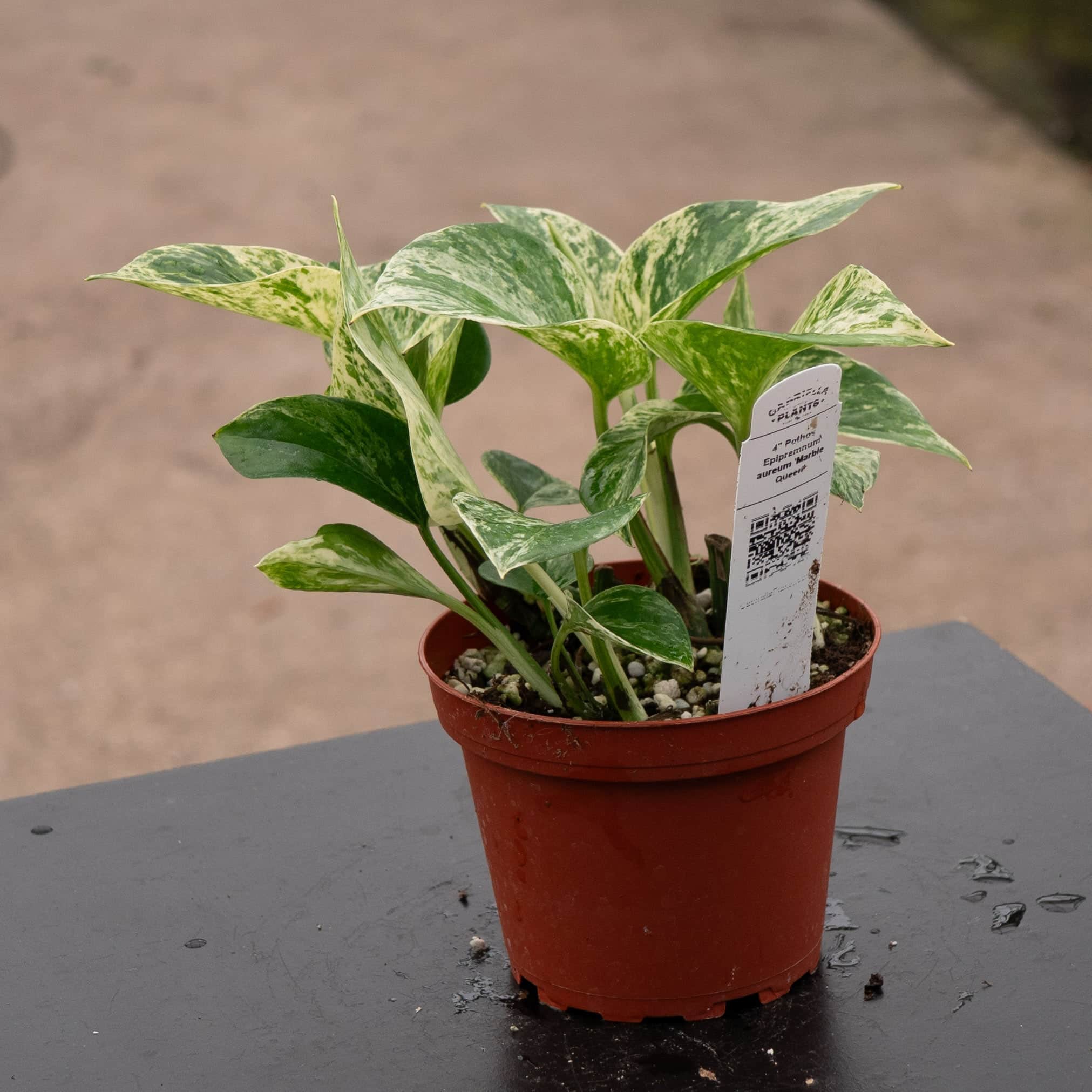
Marble queen pothos is very drought tolerant. The number one killer is overwatering, not underwatering.
Let the top 2 inches of soil dry out before watering again. In winter, scale back – the plant’s growth slows and it needs far less water.
Signs you’re overwatering:
- Yellow leaves (especially lower leaves)
- Soft, mushy stems at the base
- Soil that stays wet for more than 10 days
Signs you’re underwatering:
- Wilting or curling leaves
- Dry, crispy edges
- Leaves losing their glossy sheen
Why It’s a Trailing Champion
Given something to trail from – a hanging basket, a high shelf, a bookcase – epipremnum aureum marble queen will cascade beautifully, with vines reaching 6-10 feet indoors. The longer the vines, the more impact the variegation has visually.
To encourage fuller growth, pinch back long vines occasionally. This redirects energy into new growth closer to the base and keeps the plant looking lush rather than stringy.
Propagation: Embarrassingly Easy
This is where marble queen really wins. Propagating is simple:
- Cut a vine just below a node (the bump where a leaf meets the stem)
- Remove the bottom leaves
- Place in water or moist soil
- Roots appear in 2-4 weeks
- Transfer to soil once roots are 1-2 inches long
One plant can become five within a season. It makes an excellent gift – and frankly, it’s hard to stop propagating once you start.
Common Problems
| Issue | Cause | Solution |
|---|---|---|
| Green leaves replacing white | Too little light | Move to brighter spot |
| Yellow leaves | Overwatering | Reduce watering frequency |
| Brown crispy tips | Low humidity or underwatering | Mist occasionally or use a pebble tray |
| Leggy vines with small leaves | Low light + infrequent fertilizing | Increase light and feed monthly |
| Root rot | Waterlogged soil | Repot in fresh well-draining mix |
The Honest Verdict
Epipremnum aureum marble queen is a plant that genuinely earns its reputation. It looks expensive, it’s nearly impossible to kill with reasonable care, it propagates freely, and it grows in places most plants refuse – low-light corners, humid bathrooms, trailing off high furniture.
If you want one houseplant that makes a visual statement without demanding constant attention, this is it.